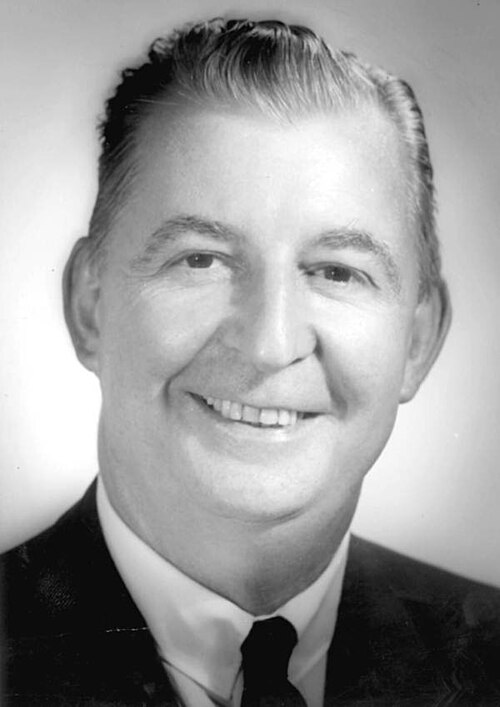
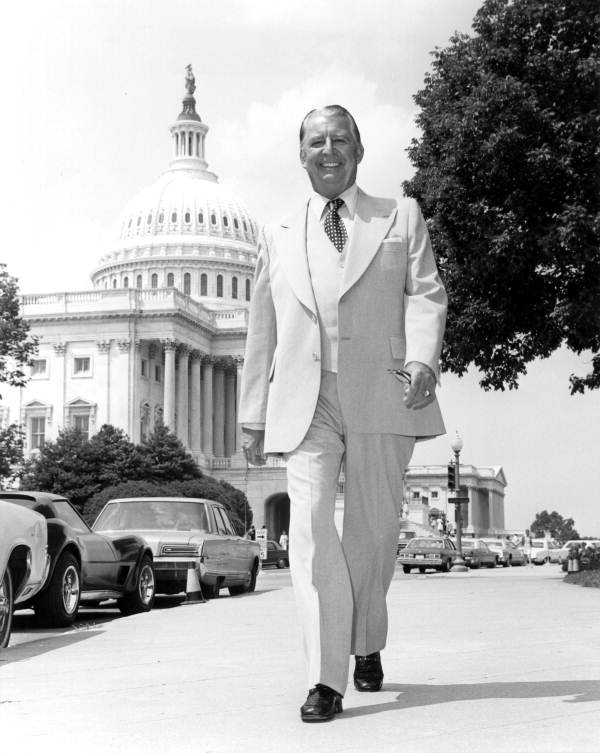
The Rise and Fall of Edward Gurney

Today Florida is seen as a Republican stronghold, but back in 1962 its voters were loyal to the Democratic Party as a matter of tradition. However, this applied to the state, rather than national Democratic Party which was too liberal for many Floridians. Indeed, Florida voters at that time had thrice in a row rejected the Democratic nominee for president, yet the only Republican they had elected to Congress in the 20th century up to this point was Bill Cramer of St. Petersburg. Republican Edward John Gurney (1914-1996) was well-suited for this environment. He was a war hero who had been severely injured by German machine gun fire, and after earning his law degree he moved to Florida as the warm climate was better for managing the pain of his war wounds as opposed to his home state of Maine. His injuries produced a permanent limp and a lifelong issue with back pain. His fast rise in Florida politics, his personality, and his good looks helped him win by three points in a newly created district. Gurney proved to have staying power and was considered the most conservative member of the Florida delegation; indeed he got nothing wrong per the standards of Americans for Constitutional Action in 1963 and 1964. Gurney also voted against the Civil Rights Act of 1964 and the Voting Rights Act of 1965. Although he was a strong opponent of the Great Society, he bent to vote for the Social Security Act Amendments in 1965, which had Medicare as its centerpiece given Florida’s high population of retirees. After his reelection in 1966, Gurney had his eyes set on the Senate, and with incumbent George Smathers not running again, he got an early start by fundraising in 1967, which helped get him a nearly 12 point victory over former Governor LeRoy Collins. This was in addition to Nixon being popular in Florida and Collins had a liberal reputation on civil rights.

While moving along in his career, Gurney suffered some tragedies. In 1968, his only son, Edward III, committed suicide and in March 1970 his wife Natalie suffered a severe stroke that resulted in her being bedridden until her death in a nursing home eight years later. While in the Senate, Gurney could be counted as a reliable supporter of the Nixon Administration, including a few occasions in which Nixon went against what conservatives wanted, such as voting for bailing out Lockheed Martin in 1971 and revenue sharing in 1972. His record on civil rights also differed a bit in the Senate from the House. Although he supported curbs on busing, he also supported extending the Voting Rights Act for five years in 1970 and supported strengthening enforcement of anti-discrimination laws. Both stances ran contrary to how he had voted while in the House. In 1970, Gurney was involved in party infighting when he sided with Governor Claude Kirk over Congressman Bill Cramer. Cramer wanted to win the Republican nomination for the Senate, while Kirk was backing G. Harrold Carswell, who was Nixon’s second defeated nominee for the Supreme Court. Congressman Cramer won the nomination, but lost the election to Lawton Chiles.

Watergate and Downfall

In 1973, Gurney was tapped to serve on the Senate Watergate Committee and he was President Nixon’s chief defender. It was his accusing Senator Sam Ervin (D-N.C.) of harassing witnesses with his line of questioning that resulted in him responding with his famous, “I’m just an old country lawyer, and I don’t know the finer ways to do it. I just have to do it my own way” (UPI). Gurney also notably grilled witness John Dean. Although Gurney looked well set for another term in the Senate, there was a serious problem: a major fundraiser, Larry Williams, had been pledging public housing contract awards to prominent Florida contractors in exchange for hefty contributions to the Gurney campaign and on January 17, 1974, he was indicted for accepting $10,000 from a Miami builder in exchange for favorable treatment by the Federal Housing Administration following an investigation by a grand jury into allegations that he had raised $300,000 from 1971 to 1972 in exchange for favors to contractors (The New York Times, 1974). The political blowback from this growing scandal may have motivated Gurney’s vote for the Federal Election Campaign Act Amendments in 1974, which he had cast right after voting for Senator James Allen’s (D-Ala.) motion to kill the bill. On May 13, 1974, Gurney testified to a grand jury under oath that he had not known about Williams’ secret fund-raising activities until June 1972 and had not known about their illegality under summer 1973 when he had requested a Justice Department investigation (The New York Times, 1975).

On July 10, 1974, Gurney himself was indicted by a Federal grand jury on seven felony counts in Jacksonville, four of which were for making false statements in his testimony and promptly dropped his reelection campaign. He only sided with the liberal Americans for Democratic Action 3% of the time in his time in Congress, the conservative Americans for Constitutional Action 92% of the time, and his DW-Nominate score was, rather surprisingly given these scores, a 0.306. His trial hinged on, much like President Nixon and Watergate, what did Gurney know and when did he know it?

In June 1975, things appeared bad for him when his administrative assistant, James Groot, pled guilty to conspiracy and provided testimony for the prosecution that contradicted Gurney’s testimony. Numerous contractors testified against Gurney and his co-defendants, while Senators James B. Allen (D-Ala.), Jesse Helms (R-N.C.), and Clifford Hansen (R-Wyo.) were character witnesses for Gurney. On August 6th, he was acquitted of five of the seven charges with the jury deadlocking on the other two; jurors voted 9-3 for conviction on the conspiracy charge and 7-5 for acquittal on making false statements to a grand jury. In September 1976, the prosecution dropped the conspiracy charge for lack of evidence and on October 27th, he was acquitted of perjury. Gurney said after the trial, “They destroyed a United States Senator, blackened my name and besmirched my character” and held that the Justice Department had moved against him based “on flimsy evidence gotten from plea-bargainers” (The New York Times, 1976). Although Gurney avoided prison, four people who worked on his campaigns went to prison for their illegal fundraising methods. Gurney’s media aide, Pete Barr, said of the matter, “A little of him died back then. The guy was a straight arrow. That was the sad thing about the charges against him” (Tampa Bay Times).

Getting Back in the Game

After Natalie Gurney’s death on January 3, 1978, he decided it was time to make a comeback. His successor to Congress, Republican Lou Frey, was not going for another term and the district could elect a Republican yet again. The 1978 race was one of contrasts; Gurney was 64 and running as an experienced, seasoned leader, while Democrat Bill Nelson was 35 and running on being a “fresh face with a clean record” (Peterson). At the time, Nelson was running as a conservative Democrat, taking the wind out of the sails of Gurney potentially trying to tag him as a “liberal”. Gurney also hoped that this race would add to his vindication and said, “You wonder [why] I’m bitter? They destroyed my career” (Peterson). This was in truth his last chance to get back in the game, do or die. However, even in 1978, the Democrats held a 60-40 voter registration advantage in the district, and the voters delivered a verdict that pretty closely reflected this advantage, Nelson winning by 23 points. Gurney did not seek public office again, remarried, and sold stocks and real estate for the remainder of his life. He died in obscurity on May 14, 1996, from what his friends reported was cancer. 

References

ADA Voting Records. Americans for Democratic Action.

Retrieved from

Ex-Sen. Edward Gurney Dies in Obscurity. (1996, May 22). Tampa Bay Times.

Retrieved from

https://www.tampabay.com/archive/1996/05/22/ex-sen-edward-gurney-dies-in-obscurity/

Former Aide Disputes Gurney; Says Senator Knew of ’72 Deals. (1975, June 10). The New York Times.

Retrieved from

Fund-Raiser for Gurney Indicted in Pay-Off Case. (1974, January 18). The New York Times.

Retrieved from

Gurney Cleared of Five Charges at Florida Trial. (1975, August 7). The New York Times.

Retrieved from

Gurney, Edward John. Voteview.

Retrieved from

https://voteview.com/person/10593/edward-john-gurney

Judge Clears Gurney on One of Two Counts. (1976, October 26). The New York Times.

Retrieved from

Peterson, B. (1978, September 11). Florida’s Ex-Sen. Gurney Striving to Return to Congress. The Washington Post.

Retrieved from

https://www.washingtonpost.com/archive/politics/1978/09/11/floridas-ex-sen-gurney-striving-to-return-to-congress/c5e22335-a52e-4634-bd54-07520df528e9/

Sam Ervin enjoyed telling those who asked about his… (1985, April 23). UPI Archives.

Retrieved from

https://www.upi.com/Archives/1985/04/23/Sam-Ervin-enjoyed-telling-those-who-asked-about-his/6349483080400/

Senator Gurney Fights to Clear his Name. United States District Court Middle District of Florida.

Retrieved from

https://www.flmd.uscourts.gov/senator-ed-gurney-fights-clear-his-name

The Hearings: Dean’s Case Against the President. (1973, July 9). Time Magazine.

Retrieved from

https://time.com/archive/6841330/the-hearings-deans-case-against-the-president/

Waldron, M. (1975, April 26). Gurney Trial Told of a Secret Drive. The New York Times.

Retrieved from

Great Conservatives from American History #25: Wallace Bennett

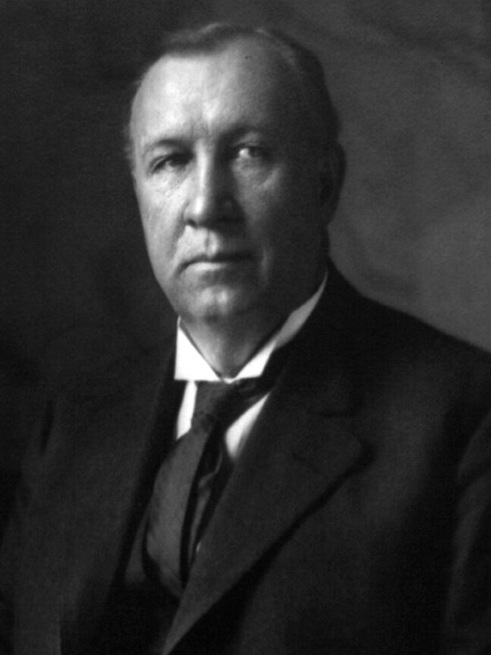
Rather recently, I have covered how Utah was not always the red state we think of it as. Indeed, their voters sent Elbert Thomas, a faithful New Dealer, to the Senate for three terms. The man who ended Thomas’s career was Wallace Foster Bennett (1898-1993). Born only two years after Utah’s admission as a state in Salt Lake City, this would always be home for him. Bennett was a Mormon and very close with their leadership. After all, he married the daughter of the LDS President Heber J. Grant. After service in World War I, Bennett earned his Bachelor of Arts and in 1920, he began his long career in business at his father’s company, Bennett’s Paint and Glass Company. In addition to heading up the company after his father’s death in 1938, he established a Ford dealership in the Bennett Motor Company and had numerous other leading positions in other businesses. He was active in the LDS Church, and even authored two books on the subject, Faith and Freedom (1950) and Why I am a Mormon (1958).

As one of Salt Lake City’s most prominent citizens, in 1949 he started his political career at the age of 51 by heading the National Association of Manufacturers. He followed this up by running against Democrat Elbert Thomas in 1950, running against his record and comparing his positions to those of communists, and was among the beneficiaries of the conservative atmosphere of that election year, winning by 8 points. That seat has not again had a Democratic occupant.

In office, Bennett supported investigating communists in the United States, but also cautioned against indulging in “personalities and propaganda” in the process, showing that he was not a fan of how Joseph McCarthy conducted himself. Indeed, he would be among the senators to vote his censure in 1954 (Bernick). Although Utah had quite a number of farmers, Bennett spoke in defense of the agricultural policies of Eisenhower’s Secretary of Agriculture, Ezra Taft Benson, which were moving agricultural policy in a free market direction. He did look out for Utah’s constituents in other ways, such as securing funding for the Central Utah Project, which although it took longer and perhaps spent more than he was comfortable with, it provides drinking water for residents of the Salt Lake Valley (Bernick). Bennett was a watchdog for free enterprise and opposed to inflationary policies. He was well-placed to address such issues as a member of the Senate Finance Committee, where he was regarded as an expert on economic issues. Although Bennett’s record was conservative, in 1958, he cast a controversial vote within the GOP when after he voted against killing the Anti-Preemption bill, he voted to kill it. The reason for this was Majority Leader Lyndon B. Johnson’s (D-Tex.) adept maneuvering. He had managed to get enough senators to either switch their votes or stay off the Senate floor so that if Bennett had voted against tabling it, the vote would have been tied and forced Vice President Nixon to cast a tie-breaking vote to table, as President Eisenhower opposed the Anti-Preemption bill (Kilpatrick). Such a vote from Nixon would have had potential to cause him difficulty among conservatives in the 1960 election. In 1959, Bennett voted for admitting Hawaii as a state, and reasoned that granting it statehood was part of pushing back against the rise of Asian communism (Bernick). During the 1960s, he would prove a consistent foe of major New Frontier and Great Society measures. He voted against aid to colleges, educational television, the Economic Opportunity Act, the Elementary and Secondary Education Act, and Medicare. His Democratic colleague, Frank Moss, noted “He was right straight up front with what he believed and didn’t believe” (L.A. Times). This earnest approach certainly was of help to him never losing an election, and he wasn’t afraid of taking an unpopular position. Bennett also was one of 19 senators to vote against the Partial Nuclear Test Ban Treaty in 1963. He did work with the Johnson Administration in getting the Coinage Act of 1965 passed.

On foreign aid, although Bennett could back spending cuts and supported anti-communist amendments, he was generally supportive of foreign aid measures. On civil rights, he voted for the Civil Rights Act of 1957, indeed all Republican senators who cast votes voted for it, but he also supported the Aiken-Anderson-Case Amendment to strike 14th Amendment implementation. Bennett did side with the Eisenhower Administration in opposing a jury trial amendment, which was regarded as weakening the bill. On the Civil Rights Act of 1964, there were reasons at the time that Bennett’s vote on the measure was doubtful. He had voted for both Sam Ervin’s (D-N.C.) and Robert Byrd’s (D-W.V.) amendments striking the employment discrimination and public accommodations section respectively and had voted “nay” on the critical vote to end the filibuster. However, Bennett was among the 28 Republicans to vote for passage. He followed up with a vote for the Voting Rights Act the next year.

During the Nixon Administration, Bennett continued his conservative record, and was a consistent supporter of the Nixon Administration’s approach on the Vietnam War. He also backed a few foreign aid measures during this time as well as bailing out Lockheed Martin. In 1972, Bennett was one of eight senators to vote against the Equal Rights Amendment. Well into his seventies, he opted not to run for another term in 1974, and resigned on December 20th to give his successor, Jake Garn, an edge in seniority. Bennett only sided with the liberal Americans for Democratic Action 8% of the time while he sided with the conservative Americans for Constitutional Action 85% of the time. His DW-Nominate score is a 0.447. In retirement, Bennett did not emphasize that he had been a senator. Indeed, regarded his four terms thusly, “That was just a job I did for a while. It is not who I am” (Bernick). Many Americans like to define themselves by what they do for a living, but Bennett saw himself outside of that. Bennett lived long enough to see his son, Robert, get elected to the Senate and attended his victory party in a wheelchair. Bennett died in his sleep shortly after a fall at his home on December 19, 1993 at the age of 95.

References

ADA Voting Records. Americans for Democratic Action.

Retrieved from

Bennett, Wallace Foster. Voteview.

Retrieved from

https://voteview.com/person/645/wallace-foster-bennett

Bernick, B. (1993, December 20). Wallace F. Bennett Dies in His Sleep. Deseret News.

https://www.deseret.com/1993/12/20/19082620/wallace-f-bennett-dies-in-his-sleep/

Kilpatrick, J.J. (1960, October 14). LBJ: Counterfeit Confederate. Human Events.

Wallace Bennett; Longtime GOP Utah Senator. (1993, December 20). Los Angeles Times.

Retrieved from

https://www.latimes.com/archives/la-xpm-1993-12-20-mn-3748-story.html

RINOs from American History #27: Robert Stafford

As I have written about before, Vermont used to not just be a solidly Republican state, but also a solidly conservative state. This declined over the years as more New Yorkers moved to Vermont and the politics shifted away from the politics of its favorite son president, Calvin Coolidge. One of the prominent Republicans who was part of this move away was Robert Stafford (1913-2006).

Stafford’s rise in state politics was in itself a sign that Vermont was a changing state. He rose up from deputy attorney general to being elected attorney general in 1954 and then elected lieutenant governor in 1956. That he moved up from lieutenant governor to governor in 1958 would have previously been considered a violation of the “Mountain Rule”, in which major statewide offices were alternated between the east and west sides of the Green Mountains. However, Vermonters identifying themselves as being of one side of the mountain or the other was declining. Another sign was that Stafford’s gubernatorial win was unusually narrow, only winning with 50.3% of the vote. Republican candidate Harold J. Arthur, a conservative, had lost his bid for the House that year to Democrat William Meyer, the first time this had happened since the Republican Party’s foundation. As governor, Stafford sought to make government more efficient while funding roads and providing scholarships for Vermonters who attended Vermont colleges.

In 1960, Stafford opted to challenge Meyer. William Meyer was a socialist who would later be a founder of the socialist Liberty Party that a young Bernie Sanders would join. Meyer’s stances for nuclear disarmament, halting of nuclear testing, and recognition of Red China were too much for Vermonters of the time and Stafford bested him by 14.5% in 1960. He proved a popular representative who while in the House was in the political center. Although Vermont voters strongly rejected Barry Goldwater’s candidacy in 1964, straight-ticket voting was not as prevalent in that time than it is today and Vermont voters knew that Stafford was a different sort of Republican than Goldwater; he was returned to office by over 15%.

Although Stafford had a reputation later in his career as an environmentalist, while in the House he voted against the 1963 Clean Air Act. However, he was  from an early time a supporter of more federal funding for sewage plants to treat water pollution.  Stafford also voted for a number of critical Great Society measures, including the 1964 Economic Opportunity Act, Medicare, and federal aid to education. However, Stafford also opposed repealing the “right to work” section of the Taft-Hartley Act and rent subsidies. Although he had sided with the conservative establishment when he opposed expanding the Rules Committee in 1961, in 1963 he voted for continuing this expansion. Stafford similarly voted against adopting the 21-Day rule in 1965 for discharging a bill from the Rules Committee but voted against repealing it in 1967. During the Nixon Administration, he voted for the 1970 Cooper-Church Amendment to delete funds for military forces in Cambodia but voted against the 1971 Nedzi-Whalen Amendment to halt funds for troops in Vietnam on January 1, 1972. If Stafford’s career had merely consisted of how he voted in the House, I wouldn’t have included him on the RINO list.

The Senate

On September 10, 1971, Senator Winston Prouty, who had preceded Stafford in the House, died of gastric cancer, and Stafford was appointed as his replacement and would win an election to complete his term. When in the Senate, Stafford was known for his advocacy of funding for education as well as previously mentioned for environmental protection. His record was increasingly liberal during the Nixon Administration. For instance, in 1974, Stafford only voted with the conservative Americans for Constitutional Action on 2 of 19 issues they counted for the Senate that year. Although he was quite the departure from the politics of Calvin Coolidge, he was about as vocal as Coolidge, which made journalist Philip Shabecoff (1988) of the New York Times regard him as possibly “the worst interview” in Washington. Stafford did tend to support military spending but was also quite internationalist, and this included his votes for the Panama Canal Treaties in 1978. The following year, he voted for the creation of the Department of Education.

During the Reagan Administration, although he gave support to a number of its early initiatives as well as initially supporting funding for arms for the Contras, he often butted heads on social and environmental policy. Stafford also played a key role in overriding President Reagan’s veto of a stronger Water Pollution Act. He commented on the matter, “I didn’t particularly enjoy finding myself at odds with the President, but it had to be done. I was not popular at the White House” (Shabecoff). Indeed, he proved challenging for the Reagan Administration as the chairman of the Senate Environment and Public Works Committee from 1981 to 1987. However, when Stafford supported Reagan it could prove challenging for him; in March 1984, a group of 44 protestors known as Winooski 44 held a three-day sit-in protest in his Winooski office over his support of selling arms to the Contras. After this, Stafford would vote for key proposals curbing aid to the Contras.

Stafford, 1986

Perhaps the thing Robert Stafford is most famous for is the creation of the Stafford Loan, which was effective from 1988 to 2010 and provided subsidized and un-subsidized low-interest loans for college students. It has since been replaced with the Ford Federal Direct Student Loan Program. He also sponsored the Disaster Relief and Emergency Assistance Act of 1988 (aka the Stafford Act), which presidents use in cases of natural disasters and that both Presidents Trump and Biden used during the COVID-19 pandemic. By the end of the Reagan years, Stafford was voting the liberal position most of the time. He agreed with ADA’s position on 16 of 20 votes in 1987 and 16 of 19 votes in 1988. Stafford’s DW-Nominate score was a 0.055, while he sided with ACA’s position 36% of the time from 1961 to 1984 and ADA’s position 55% of the time.

After his retirement, Stafford wouldn’t offer much commentary on the issues, although he gave the message that Republican Jack McMullen was too unfamiliar with Vermont and unknown to Vermonters to run for the Senate in 1998 and expressed support for the state’s legalization of same-sex civil unions in 2000. Stafford died on December 23, 2006 at the age of 93. On the year of his death, 14 million Stafford loans were granted (NBC News).

References

ADA Voting Records. Americans for Democratic Action.

Retrieved from

Former Vermont Sen. Robert Stafford dies at 93. NBC News.

Retrieved from

https://www.nbcnews.com/id/wbna16338752

Shabecoff, P. (1988, December 28). Washington Talk: The Senate; Quiet Vermonter Who Makes His Words Count. The New York Times.

Retrieved from

Stafford, Robert Theodore. Voteview.

Retrieved from

https://voteview.com/person/10562/robert-theodore-stafford

Operation Just Cause

On Saturday, Americans learned that Venezuelan dictator Nicolas Maduro had been taken from Caracas by U.S. forces and flown to Manhattan for trial. The most obvious comparison between the ouster of Maduro by the U.S. is the ouster of General Manuel Noriega of Panama. Although the cases of Maduro and Noriega on their faces do look the same, as in a Latin American dictator is engaged in drug trafficking and is wanted by the United States, there are some significant differences between the circumstances that resulted in Operation Just Cause.

Relations between the U.S. and Panama have had a complicated history, and part of this was the control of the U.S. over the Panama Canal, which they had constructed, and the area they owned called the Panama Canal Zone. Starting in the 1960s, agitation for Panamanian ownership of the Panama Canal began, and U.S. leaders began supporting turning over the Panama Canal to improve relations with Latin America. President Gerald Ford endorsed the idea while Jimmy Carter came around to it once he was president. With the signing of the Panama Canal treaties in 1978, the U.S. and Panama had certain treaty obligations, such as the U.S. reserving the right to militarily intervene if neutrality over the canal was violated. Carter had signed the treaty along with Panama’s leader, Omar Torrijos. However, Torrijos was killed in an air crash in 1981, and the power vacuum that followed was resolved by the rise to power of Manuel Noriega. Noriega was never officially the leader, rather he had puppet presidents.

The U.S. and Noriega: From Friends to Foes

Manuel Noriega had a long and complicated relationship with the United States, which began with his recruitment from the Panamanian military to study at the School of the Americas through the U.S. Department of Defense in the 1950s, which trained many anti-communist fighters in the Western Hemisphere. Noriega rose up through the Panamanian military and in 1968, he bet on the right horse when he backed the coup that deposed President Arnulfo Arias for Omar Torrijos. As a reward, Torrijos made him chief of military intelligence. In 1971, the CIA began paying him for intelligence (Graham). In 1981, however, Torrijos was killed in a mysterious plane crash and out of the power vacuum Noriega became the unofficial leader of Panama. He was never president, rather he had figureheads serve his interests as president. The U.S. was initially supportive of Noriega as an anti-communist leader in Panama, and indeed he provided military support for the Contras in Nicaragua. However, the CIA wasn’t his only outside source of income. In 1982, Noriega cut a deal with Pablo Escobar to allow his cocaine to move through Tocumen International Airport. In return, Noriega would get $1000 per kilo of cocaine that reached the U.S. Although the U.S. knew of this arrangement, they valued him for his providing weapons and funding of Contra rebels in Nicaragua. However, what they didn’t know until later is that the CIA wasn’t the only intelligence agency paying him. Despite his anti-communist stance, Noriega was also a double-agent, accepting money from Cuban intelligence in exchange for information on the U.S. He also became increasingly brutal as a ruler, including beheading political rival Hugo Spadafora in 1985. After the president he had rigged the 1984 election for, Nicolas Ardito Barletta, promised an investigation, Noriega forced his resignation. On February 4, 1988, Noriega was indicted in Miami for drug trafficking and money laundering. In May 1989, Noriega again stole the election, much like Nicolas Maduro had in Venezuela in 2024. Noriega afterwards amped up the hostility to the U.S., including stating that the U.S. and Panama were in a “state of war” and with his forces firing on U.S. marines, killing one, and abducting another marine and his wife, brutally beating him and threatening her with sexual assault. Given that Noriega was acting with such impunity there was certainly an existing risk for the neutrality of the Panama Canal.

On December 20, 1989, Operation Just Cause, or the invasion of Panama, was ordered by President Bush. A tremendous amount of American public support already existed for such an action, unlike the sudden operation and capture of Maduro, which came a bit out of left field for most, as prediction markets showed (the success of this however certainly serves to blunt a lot of criticism). The invasion of Panama proceeded quickly, and Noriega fled to the Vatican’s embassy for diplomatic sanctuary. The US forces proceeded to surround the embassy and blast disturbing chicken sounds and numerous songs including “Give it Up” by K.C., “Welcome to the Jungle” by Guns N’ Roses, “Never Gonna Give You Up” by Rick Astley, “Danger Zone” by Kenny Loggins, and “Panama” by Van Halen as a form of psychological warfare to get Noriega to come out (Myre). Noriega surrendered on January 3, 1990 and he was brought to the U.S. for trial.

Noriega was convicted by a Miami jury and sentenced to 40 years imprisonment for drug trafficking, racketeering, and money laundering. He served 17 years after which he was extradited to France where he was convicted of money laundering in 2010 and then extradited back to Panama where he was imprisoned for murder, corruption, and embezzlement, having previously been convicted in absentia. He died in a Panama City hospital of cancer on May 29, 2017. Some differences that exist between Maduro and Noriega is that although you could say that Venezuela is a national security issue for the U.S. given their relationships with China and Russia and that under Maduro it had become a narco state, there were more clear open hostilities with the U.S. with Panama and the Panama Canal lay in the balance.

References

Graham, D.A. (2017, May 30). The Death of Manuel Noriega – and U.S. Intervention in Latin America. The Atlantic.


Retrieved from

https://www.theatlantic.com/international/archive/2017/05/manuel-noriega-obituary-monroe-doctrine/518982/

Myre, G. (2017, May 30). How the U.S. Military Used Guns N’ Roses To Make a Dictator Give Up. National Public Radio.

Retrieved from

https://www.npr.org/sections/thetwo-way/2017/05/30/530723028/how-the-u-s-military-used-guns-n-roses-to-make-a-dictator-give-up

Panama invasion: The US operation that ousted Noriega. (2019, December 19). BBC.

https://www.bbc.com/news/world-latin-america-50837024

The Rise and Fall of Manuel Noriega. Noiser.

https://www.noiser.com/real-dictators/the-rise-and-fall-of-manuel-noriega

How They Voted: The War Powers Resolution

The subject of the war powers of the president have again arisen with the Saturday U.S. raid on Caracas and the capturing of Venezuelan dictator Nicolas Maduro and his wife for trial. President Trump did not invoke the War Powers Resolution, although neither did President George H.W. Bush for his invasion of Panama in 1989-1990. The War Powers Resolution is definitely a subject of discussion, though, for this most notable event and today I am looking into the circumstances of the adoption of the War Powers Resolution.

Clement J. Zablocki (D-Wis.) and Nixon.

By 1973, the U.S. was in the process of withdrawing from Vietnam and many members of Congress were critical of how both Presidents Johnson and Nixon had used their war powers. For the latter, it was when Nixon ordered secret bombings of Cambodia without seeking Congressional consent. In the House, Clement J. Zablocki (D-Wis.), chairman of the House Foreign Affairs Committee, introduced the War Powers Resolution. The measure had bipartisan support as well as drafting, with Paul Findley (R-Ill.) being the resolution’s main author. The resolution requires the president to notify Congress within 48 hours of military action and bars forces from remaining for more than 60 days. The first body to vote on this resolution would be the House. On July 18, 1973, they voted for 244-170 (D 171-61, R 73-109). The central architect of the resolution in the Senate was Jacob Javits (R-N.Y.), one of the most liberal members of Nixon’s party who had repeatedly been in opposition to the Nixon Administration on Vietnam. He considered the measure as “a critical departure from the past” (CQ Almanac 1973). However, the measure attracted broad support, and a key senator to come out in favor was the chairman of the Senate Armed Services Committee and known conservative John C. Stennis (D-Miss.), who expressed that “It is of the utmost importance to the future of this nation that we not again slip gradually into a war that does not have the moral support and sanction of the American people” (CQ Almanac 1973). However, the measure did not have the support of another prominent figure from the South, a legal authority on the Constitution, Sam Ervin (D-N.C.). Ervin held that the measure was unconstitutional, stating, “Here is a power and a duty which the Constitution clearly imposes upon the President of the United States, to use the armed forces to protect this country against invasion. And here is a bill which says expressly that the President of the United States cannot perform his constitutional duty and cannot exercise his constitutional power to protect this country against invasion for more than 30 days without the affirmative consent of Congress” (CQ Almanac 1973). There was also a small cadre of liberals who opposed the War Powers Resolution as not being sufficiently strong. Thomas Eagleton (D-Mo.) objected to the absence of a provision disallowing the use of intelligence agencies or other actors to engage in hostilities against other nations (CQ Almanac 1973). On July 20th, the resolution was adopted 72-18 (D 50-4, R 22-14), but because it was different from the House version, the measure had to go into conference. October 10th, the equation did not change in the Senate with a vote of 75-20 (D 49-6, R 26-13, C 0-1), still a veto-proof margin. However, original passage in the House had not been veto-proof. This, however, would not remain so as President Nixon’s popularity was declining from the continuing sore on his presidency that was Watergate.

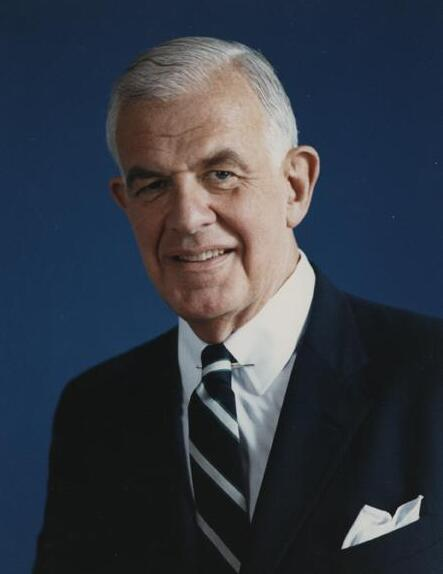
Majority Leader Tip O’Neill (D-Mass.) argued for the resolution, holding that “If the President can deal with the Arabs, and if he can deal with the Soviets, then he ought to be able and willing to deal with the U.S. Congress. That is all we ask of him” (CQ Almanac 1973). Democratic leadership was united in favor, and Republican leadership was mostly united against. The exception was Senate Minority Leader Hugh Scott (R-Penn.), thus the foremost opponent in the House was Minority Leader Gerald Ford (R-Mich.). Ford, less than a year away from being president, expressed his concerns, “We may be a long ways from being out of the woods. I am very, very concerned that the approval of this legislation over the President’s veto could affect the President’s capability to move forward from cease-fire and to achieve a permanent peace” (CQ Almanac 1973). The resolution passed on October 12th 238-122 (D 163-38, R 75-84). President Nixon, as no one doubted he would, vetoed the resolution. Further eroding Nixon’s popularity, however, between final passage and his veto of the resolution, the “Saturday Night Massacre” had occurred, in which Attorney General Elliot Richardson resigned after refusing Nixon’s order to fire special prosecutor Archibald Cox, and Deputy Attorney General William Ruckelshaus was fired after refusing to fire Cox. Solicitor General Robert Bork ultimately agreed to fire Cox.

The real battle to override the President’s veto occurred in the House, as supporters had more than enough on passage in the Senate to get the resolution through. To achieve an override, eleven opponents of the president had to be lobbied to switch their votes from “nay” to “yea”. Bella Abzug (D-N.Y.), one of the most left-wing members of Congress, had opposed, stating before the conference report that “I shall vote against this bill because it is patently unconstitutional and gives the President power he does not now have…I fear that it does exactly the opposite of what we set out to do: that is, to prevent the President, any president, from usurping the power of Congress to declare war” (CQ Almanac 1973). Speaker Carl Albert (D-Okla.) and the liberal group Americans for Democratic Action actively lobbied these legislators to switch. Their efforts were successful, as eight did so, including Abzug. The House vote of 284-135 (D 197-32, R 87-103) to override on November 7th was four votes above the threshold needed to override President Nixon’s veto.

In the Senate, with an override now inevitable, a few members switched their votes later that day: Republican Howard Baker of Tennessee and Democrats James Allen of Alabama, Harold Hughes of Iowa, and Gaylord Nelson of Wisconsin switched from “nay” to “yea” while Republicans Ted Stevens of Alaska and Henry Bellmon of Oklahoma switched from “yea” to “nay”. The vote was 75-18 (D 50-3, R 25-14, C 0-1). On a side note, the vote on the resolution as reported by Voteview has an error, as Senators Tunney (D-Calif.) and Tower (R-Tex.) have their votes swapped; Tower opposed the War Powers Resolution while Tunney supported. Overall, most of the resolution’s opponents were conservative, but there were some interesting conservative votes in favor on overriding the president’s veto, such as John Ashbrook (R-Ohio), who had run a quixotic primary campaign in 1972 to Nixon’s right, the legendary penny-pincher H.R. Gross (R-Iowa), and John Rousselot (R-Calif.), the only member of the John Birch Society in Congress at the time. In the Senate, conservative Republicans were a bit more unified against with Barry Goldwater (R-Ariz.) and Jesse Helms (R-N.C.) being among the dissenters, but you did have guys like James McClure (R-Idaho) and William Scott (R-Va.) as votes in favor. In another indication of how poorly the Nixon Administration was doing on popularity, among Southern Democrats, a key group that Nixon sought to court support, only Sam Ervin voted against overriding Nixon’s veto.  

There have been critics of this resolution, both as being too strong and too weak. Law Professor Robert F. Turner argued in a Fall 2012 journal article that the War Powers Resolution was unwise, unconstitutional, and even resulted in a reduction of American security to the point that it directly contributed to the 9/11 attacks. However, Scott R. Anderson, a fellow of the Brookings Institution, holds that although the War Powers Resolution is imperfect, it was a good undertaking that had a positive result in constraining the executive in getting the US into prolonged wars.

References

Anderson, S.R. (2023, November 9). The Underappreciated Legacy of the War Powers Resolution. Lawfare.

Retrieved from

https://www.lawfaremedia.org/article/the-underappreciated-legacy-of-the-war-powers-resolution

Enactment of War Powers Law Over Nixon’s VETO. CQ Almanac 1973. CQ Press.

Retrieved from

https://library.cqpress.com/cqalmanac/document.php?id=cqal73-1227822#_

To Agree to the Conference Report on H.J. Res. 524, Concerning the War Powers of Congress and the President. Voteview.

Retrieved from

https://voteview.com/rollcall/RH0930382

To Agree to the Conference Report on H.J. Res. 542, to Govern the Use of the Armed Forces by the President During the Absence of a Declaration of War. Voteview.

Retrieved from

https://voteview.com/rollcall/RS0930451

To Override the President’s Veto of H.J. Res. 542, Concerning the War Powers of the Congress and the President Concerning the War Powers of the Congress and the President. Voteview.

Retrieved from

https://voteview.com/rollcall/RH0930412

To Override the President’s Veto of H.J. Res. 542, to Govern the Use of the Armed Forces by the President During the Absence of a Declaration of War. Voteview.

Retrieved from

https://voteview.com/rollcall/RS0930462

To Pass H.J. Res. 524. Voteview.

Retrieved from

https://voteview.com/rollcall/RH0930249

To Pass S. 440, a Bill to Govern the Use of the Armed Forces by the President. Voteview.

Retrieved from

https://voteview.com/rollcall/RS0930303

Turner, R.F. (2012, Fall). The War Powers Resolution at 40: Still an Unconstitutional, Unnecessary, and Unwise Fraud that Contributed Directly to the 9/11 Attacks. Case Western Reserve Journal School of Law, 45(1).

Retrieved from

Newt Gingrich, Part II: Rise in Influence, 1984-1994

The 1984 election was a blowout for Republicans on the presidential level but just an okay one down ticket. In the House, they gained 16 seats but in the Senate they had a net loss of two. Newt Gingrich had had some influence on President Reagan’s messaging for this election, notably his embrace of Gingrich’s proposed “opportunity society” platform. However, the 1984 election would also raise Gingrich’s profile in another way, that being the most controversial election of the year.

The “Bloody Eighth” Contest

Indiana’s 8th district, known at the time as the “Bloody Eighth”, had since its modern configuration in 1932 been a highly contested district. Up to 1985, the district had been represented by Democrats for 32 years and Republicans for 20 years. Democrat Frank McCloskey was a freshman running for reelection. He had defeated Republican H. Joel Deckard for reelection in 1982, and Republicans believed they had a good chance of retaking the district with Rick McIntyre. On election night, it appeared that they had indeed done so, with McIntyre up by only 34 votes. Indiana’s Secretary of State had given him a certificate of victory, which he presented in Washington. However, House Majority Leader Jim Wright (D-Tex.) objected to McIntyre’s seating, and the certificate had been granted on the basis of the outcome of a recount in only one of the state’s counties (Kruse). Democrats also questioned some of the election practices that occurred. For instance, there were thousands of documented cases of ballots being tossed out on technicalities, such as errors by poll workers (Kruse). Congress initiated an investigative group that had two Democrats and one Republican. The most controversial event to stem from this investigation was the casting of 94 ballots that were not notarized or witnessed from these counties, none of which should legally have been counted, yet 62 were among the count and could not be removed. 32 remained, and since the 62 were counted, the Republicans argued, the 32 should be counted as well. However, Democrat Bill Clay (D-Mo.) argued that to count the next 32 “would be to compound the problem that already exists”, but this ran counter to Democratic rhetoric of the time to count all the ballots (Kruse). The outcome of this investigation was that the committee certified McCloskey the winner by a mere four votes. Republicans regarded this as the Democrats stealing the seat and uniformly opposed McCloskey’s seating, but Democrats had a majority. Even to modern day, the surviving partisans of the event stick to their narratives on the rightness or wrongness of McCloskey’s seating. Newt Gingrich in response vowed that, “We will make it impossible for this House to function. You’ll see literal war in the House” (Kruse). There was indeed a sea change, and the language of Republicans, including ones who had been conciliatory in their language, such as Dick Cheney, changed. Cheney justified his shift, stating, “What choice does a self-respecting Republicans have…except confrontation? If you play by the rules, the Democrats change the rules so they win. There’s absolutely nothing to be gained by cooperating with the Democrats at this point” (Kruse). Republicans called for a redo of the election, but Democrats stuck by their procedure. Even Minority Leader Bob Michel (R-Ill.), golfing buddy of Speaker Tip O’Neill, said, “Things…will never be the same” (Kruse). Republicans uniformly walked out of the House in protest when McCloskey was sworn in. Now, they were far more receptive to Newt Gingrich’s bomb-thrower style. As Gingrich ally Vin Weber (R-Minn.) reflected on this, “It gave Newt credibility. Newt went from being the kind of bomb-throwing back bencher who was going to remain on the fringe of Republican politics and his ideas kept moving him steadily toward the majoritarian position in the House Republican conference. Because they saw, ‘Yeah, he’s basically right. He’s right about them. He’s right about our relationship to them. And he’s probably right about what we have to do” (Kruse). A subsequent investigation by the Evansville Courier would only further provide further fuel for the fire. Their investigation discovered that of the 32 ballots that had not been counted, 26 of the voters had managed to be contacted, and of those 20 stated that they had tried to cast their ballot for McIntyre (Kruse). Had the Democrats stuck to their rhetoric, McIntyre would have won. Republicans came to believe as Cheney did that the Democrats just changed their own rules when it suited them to win.

The Rest of Reagan’s Term

Gingrich, now having the backing of many more of his Republican colleagues, continued his partisan activity. He was unwavering in his support for the Strategic Defense Initiative (“Star Wars”) and backed nearly all of Reagan’s vetoes (South Africa sanctions was an exception). Although Republicans didn’t like Tip O’Neill for his liberalism, they would like his successor, Wright, even less.

Gingrich vs. Speaker Wright

Gingrich shaking hands with Minority Leader Robert Michel (R-Ill.) after winning the post of minority whip.

With the retirement of Tip O’Neill at the end of the 99th Congress, Wright was the new speaker. Speaker Wright took a stronger partisan tone at least in part because he, like many other Democrats, were concerned about Newt Gingrich and his contingent of younger conservatives. His rule of the House was more imperious than past speakers. For example, Wright decided to completely leave out minority Republicans from decision-making and curbing staff positions for them. Rep. Vin Weber (R-Minn.) expressed the Republican discontent over Wright, “The dislike of Speaker O’Neill was ideological…he was really the symbol of northeastern liberalism. The dislike of Speaker Wright is different. Republicans think he is basically and fundamentally unfair; that he does not have the respect for the institution like Tip; that deep down he is a mean-spirited person, ruthless in the truest sense of the word” (Wallach). It also should be noted about Wright that he was mentored by Lyndon B. Johnson, so playing hardball was well within his repertoire. He also angered Republicans for attempting to negotiate with the Contras and Sandinistas despite President Reagan’s refusal and that foreign policy is foremost an executive rather than a legislative function. Gingrich suspected that Wright had skeletons in his closet and had commissioned an investigation into his background. It turns out he had suspected correctly, and in May 1988 he filed an ethics complaint against him. In March 1989, as the investigation was concluding, Gingrich was narrowly party whip to replace Dick Cheney over the considerably more moderate Edward Madigan of Illinois, who had been backed by Minority Leader Robert Michel (R-Ill.).

The Troubles with Jim Wright

There were some significant issues with Wright. The first was his business connection to Fort Worth developer George Mallick. It was alleged that Wright had accepted almost $145,000 in gifts from him since 1979 (Kelley). The second was that Wright had contravened House ethics rules on limitations on speaking fees through selling his 1984 collection of speeches, titled Reflections of a Public Man, and employed Betty to circumvent limitations on gifts. Third, he employed John Mack as his chief of staff. The problem with him? In 1973, Mack had, in a senseless act, smashed a woman on the head five times with a hammer, stabbed her in the shoulder and chest, slit her throat, and then dumped her in her car, leaving her for dead while he went to see a movie (Time Magazine). The woman survived and he had been sentenced to 15 years imprisonment for malicious wounding with intent to kill but only served 27 months in county jail. Why only 27 months? Mack had the good fortune to be the brother of Wright’s son-in-law (Time Magazine). What’s more, he was the executive director of the Democratic Steering and Policy Committee. That Mack had had this felonious episode in his past was known among Washington insiders, but for the public to hear it was shocking to them and this exposure forced Mack to resign on May 11, 1989. This wasn’t all for Wright; on April 17, 1989, he was charged with violating 69 House ethics rules. Furthermore, this was around the time of the Savings & Loan scandal, and Wright’s rise was alleged to have been assisted by S&L fraudsters including the infamous Charles Keating. The deputy head of the Federal Savings and Loan Corporation, William K. Black, alleged that Wright had intervened in favor of S& L executives. However, these allegations were not among them. Things were only going to get worse for Wright, thus he resigned on June 6, 1989, the first speaker ever to do so. Interestingly, Rep. Bill Alexander (D-Ark.) filed an ethics complaint against Gingrich in April 1989, accusing him of violating House rules with a book promotion deal in 1984, and publicly stated, “Mr. Gingrich is a congressional Jimmy Swaggart, who condemns sin while committing hypocrisy” (Los Angeles Times). He would file a second one against him as well, but on March 7, 1990, both complaints were dismissed by the House Ethics Committee as they concluded that Gingrich’s book promotion had not violated House rules or the law. After the ruling, he dismissed the charges as a “political smear…I am glad the committee was thorough, and I am happy the charges have been exposed as politically inspired nonsense” (CQ Almanac, 1990). The committee’s ruling probably saved Gingrich’s reelection, as in 1990 he had a close call for reelection, winning by only 974 votes against Democrat David Worley. However, Gingrich’s focus on ethics for Wright would come back to haunt him later, but that’s going to be in the next Gingrich post. Wright’s successor was Tom Foley (D-Wash.).

Gingrich and the “Gang of Seven”

The 1990 midterms were known as the “election about nothing” and was pretty sedate given that Democrats only gained eight seats in the House and one in the Senate. However, it did send seven new Republicans to Congress who sought to shake things up. This group, which included future Speaker of the House John Boehner of Ohio, was known as the “Gang of Seven”.

In 1992, Gingrich decided to give his tacit blessing to them in their exposure of the mismanagement of the House Bank, as he figured this scandal would do more damage to Democrats than Republicans. The House Banking scandal resulted in the convictions of four former representatives, a former delegate, and the House Sergeant at Arms. The House Ethics Committee singled out 22 representatives for leaving checking accounts overdrawn for at least eight months, and 18 were Democrats. These representatives had between 89 and 996 checks overdrawn. One of the 22, incidentally, was Gingrich antagonist Bill Alexander, who would not run for reelection in 1992. Gingrich himself had 22 overdrawn checks, but his paled in comparison to the number and length of time of the 22 representatives. This was a risky exposure for him, and he faced a significant primary challenger. That year, state legislator Herman Clark challenged Gingrich for renomination, criticizing his overdrawn checks and his use of a chauffeured limousine (The Christian Science Monitor). However, Gingrich narrowly pulled off a victory, winning by 980 votes. There would be yet another scandal with the exposure endorsed by Gingrich by the “Gang of Seven”, and this was the Congressional Post Office scandal, which resulted in Congressional Postmaster Robert Rota pleading guilty to three criminal charges in 1993 and implicating House Ways and Means Committee Chairman Dan Rostenkowski (D-Ill.) and former Representative Joe Kolter (D-Penn.), who were convicted on corruption charges.

The 1994 Election – Contract with America

The 1994 midterms weighed rather heavily on the Clinton Administration for several reasons. There was a backlash against the proposed “Hillarycare”, the Brady Bill was unpopular in a number of rural areas with Democratic incumbents, and Republicans were far more energized to turn out than Democrats. Heavily inspired by President Reagan’s 1985 State of the Union Address, written by Gingrich and Dick Armey (R-Tex.), and with input from the Heritage Foundation, came the Contract with America. This document was a pledge to the American people that if Republicans got a majority they would enact eight institutional reforms as well as bring ten key bills to the floor of Congress for a vote within the first 100 days of Congress. This provided a clear message and platform for the Republicans and although the degree of this document’s impact on the election is certainly debatable, it gave Republicans a solid platform to run on and made the midterm national. Republicans won nearly 9 million more votes than they ever won in midterm elections, while the Democratic vote had shrunk by 1 million from the 1990 midterms (CQ Almanac, 1994). Republicans gained 54 House seats, getting them a 230-204 majority, while they gained 8 seats in the Senate, resulting in 52-48 majority. This was the first time in 40 years that Republicans had held a majority in the House, and they had only held the Senate for 6 of the last 40 years.

Some of the biggest defeats of the 1994 midterms were that of Speaker Tom Foley of Washington, the beleaguered Rostenkowski, and Judiciary Committee chairman Jack Brooks of Texas. As far as Gingrich and the Republicans were concerned, 1994 had granted them a mandate, so how would Gingrich and this “Contract with America” do? That is for the next Gingrich post.

References

Capitol Offense. (1989, May 15). Time Magazine.

Retrieved from

https://time.com/archive/6702510/capitol-offense/

Formal Ethics Complaint Filed Against Gingrich by Democrat. (1989, April 12). Los Angeles Times.

Retrieved from

https://www.latimes.com/archives/la-xpm-1989-04-12-mn-1694-story.html

Gingrich Case Dismissed. CQ Almanac 1990.

Retrieved from

https://library.cqpress.com/cqalmanac/document.php?id=cqal90-1112264#_

Gingrich Wins Close Race In Congressional Primary. (1992, July 23). The Christian Science Monitor.

Retrieved from

https://www.csmonitor.com/layout/set/amphtml/1992/0723/23033.html

Kelley, E. (1989, April 18). 69 Ethics Violations Cited Against Wright. The Oklahoman.

Retrieved from

https://www.oklahoman.com/story/news/1989/04/18/69-ethics-violations-cited-against-wright/62616749007/

Kruse, M. (2023, January 6). The ‘Stolen’ Election That Poisoned American Politics. It Happened in 1984. Politico.

Retrieved from

https://www.politico.com/news/magazine/2023/01/06/indiana-8th-1984-election-recount-00073924

Rare Combination of Forces Makes ’94 Vote Historic. CQ Almanac 1994.

Retrieved from

https://library.cqpress.com/cqalmanac/document.php?id=cqal94-1102765#_

Wallach, P.A. (2019, January 3). The Fall of Jim Wright – and the House of Representatives. The American Interest.

Retrieved from

The 1948 Election: Expectations Subverted!

Come November 2, 1948, Republicans were highly confident that they would have a new president in Thomas E. Dewey. Dewey was the governor of New York and a young, genial if a bit of a tame candidate. He had also earned great acclaim as the mob-busting district attorney of Manhattan. Dewey had been aggressive on the 1944 campaign trail, and his advisors believed he needed to play it safe this time. However, one person who did not think so was House Speaker Joe Martin’s (R-Mass.) mother, who according to Martin (1960) while Dewey was campaigning in North Attleboro, “admonished him with more wisdom than any of us realized at the time ‘Don’t take it so easy'” (19). President Harry S. Truman was not taking it easy…at all.

The common perception of Truman’s chances.

President Truman faced not one, not two, but three challengers in 1948. Generally, having more than one significant challenger as a president is bad news for the president’s party. This proved most notably true in 1892, 1912, 1968, and 1992. Along with Dewey, Truman faced two breakaways from within his own party. The first was former Vice President Henry A. Wallace, who was nominated to run for president for the newly constituted Progressive Party, not to be confused with Theodore Roosevelt’s Progressive Party or Wisconsin’s Progressive Party. Wallace ran on a staunchly left-wing platform and refused to criticize communists, and although this Progressive Party did not start as a communist venture, the party machinery became controlled by secret communists and went as far as to oppose the Berlin Airlift (Radosh). Wallace would later regret his run and realize the error of his positions on communism. On Truman’s right was the State’s Rights Party (or “Dixiecrat” party) and its nominee, South Carolina Governor Strom Thurmond. Before his run, Thurmond was seen as a bit of a racial moderate by Southern standards. However, with this campaign he became the national spokesman for Jim Crow. President Truman had ordered the desegregation of the army and embraced a civil rights platform, which seriously tested Southern support for him.

Truman worked hard to get reelected. He went around the nation blasting the “do nothing” Republican 80th Congress (they simply weren’t doing what he wanted on domestic issues and doing things he didn’t want). Dewey opted to stay above the fray and not defend the 80th Congress. Truman also campaigned heavily on the farm vote, placing blame on the Republican Congress for a grain storage shortage and highlighting Republican cuts to agricultural programs.

Although all newspaper polls predicted a Dewey win, including papers preemptively publishing that he won, as seen in the below picture, Truman managed to completely defy expectations. Instead of divisions harming him, they actually helped distinguish him from radicals and from segregationists, which helped him consolidate votes from moderate voters, farmers, and blacks. Truman swept much of the Midwest, the West, and although he lost four Southern states to Thurmond, it was not enough to hamper him. In New York, the Progressive Party’s presence did split the left and Dewey won the state, but that was the most damage they did to Truman.

The results were apparent down ticket too, as Republicans not only lost the House, but their loss was a whopping 75 seats! In the Senate, Republicans lost 9 seats.

In California, Democrats gained three seats, but this was offset by two with Republican Hubert Scudder succeeding retiring Democrat Clarence F. Lea and Republican Thomas Werdel succeeding retiring Democrat Alfred Elliott. The sweetest loss for Truman was most certainly Fresno’s Bud Gearhart, who he had specifically campaigned against as a conservative obstructionist, “You have got a terrible Congressman here. He has done everything he possibly could do to cut the throats of the farmer and the laboring man” (Time Magazine).

In Colorado, two Democrats defeated Republican incumbents. Republican Robert Rockwell was defeated by Democrat Wayne Aspinall, who would serve in Congress until 1973, while Democrat John Marsalis’s defeat of J. Edgar Chenoweth would not stick and he would return in the 1950 election.

In Connecticut, two House Republicans lost reelection, but this was not too shabby; Republicans had been out all of their seats before and would get fully wiped out in the 1958 midterms. A notable Congressional freshman was future senator Abe Ribicoff.

In Delaware, Republican Senator C. Douglass Buck lost reelection to Democrat J. Allen Frear.

In Idaho, Democrat Compton White would return for one more term. He had served from 1933 until his 1946 defeat by Abe Goff. Republican Senator Henry Dworshak would lose reelection to Democrat Bert Miller, but he would return after Miller died the next year.

In Illinois, Republicans lost six seats, most prominently in Chicago. This was before Richard Daley made Democrats the undisputed dominant party of the city. Republican Senator Curly Brooks would lose reelection to Democrat Paul Howard Douglas in an upset.

In Indiana, Republicans lost five seats, which is a bit hard to imagine today.

In Iowa, Senator George Wilson was defeated for reelection by Democrat Guy Gillette, who had previously served in the Senate. An added shocker to Truman’s win in that staunchly Republican state.

In Kentucky, Republican W. Howes Meade lost reelection to Democrat Carl Perkins. Perkins would serve until his death in 1984 and became most noted for his work on education. Republican Senator John Sherman Cooper would also lose reelection, to Democrat Virgil Chapman.

In Massachusetts, Republican Charles Clason lost to Democrat Foster Furcolo, who would later serve as the state’s governor.

In Michigan, Republicans lost two House seats in Detroit. Yeah, it was a different time back then. A notable freshman was future President Gerald Ford of Grand Rapids.

In Minnesota, the Democrats proved that the merger of the Democratic Party and the Farmer-Labor Party was an excellent idea. They had gone from only representing the Iron Range to Hubert Humphrey defeating Republican incumbent Joseph Ball for the Senate by 20 points and gaining three House seats. Second only in sweetness to Humphrey’s victory in Minnesota for Truman was most certainly the defeat of House Ways and Means Committee Chairman Harold Knutson, who had been in office since 1917, was a bitter foe of internationalism, and was at loggerheads with the Truman Administration on tax reduction.

In Missouri, Truman was certainly jumping for joy at Democrats gaining eight House seats. Republican House incumbents were almost entirely wiped out, with only Springfield’s Dewey Short surviving the wave.

In Nebraska, Warren Buffett’s father, Howard, was defeated for reelection in Omaha. Buffett would return in the 1950 election for one more term.

In New Jersey, Democrats gained three seats, including that of retiring Republican Fred Hartley of Newark, who had sponsored the Taft-Hartley Act, which passed over President Truman’s veto. His successor, Peter Rodino, would serve until 1989 and chair the House Watergate Committee. That seat has not been represented by a Republican since.

In Nevada, Democrat Walter Baring won the seat.

In New York, Democrats gained nine seats, but one of those was from American Labor Party Congressman Leo Isacson. Five of the Republican losses were in New York City.

In Ohio, Republicans lost eight House seats, including that of At-Large Representative George Bender, who would be among the returning representatives in the 1950 election.

In Oklahoma, Democrats had a clean sweep of the state, with Republican George Schwabe of Tulsa losing to Dixie Gilmer (Schwabe would come back for one more term in the 1950 election) and they would gain the Enid-based seat as well as a Senate seat.

In Pennsylvania, Republicans lost eleven seats, including four in Philadelphia. Yes, Philadelphia used to be a strongly Republican city, but this election was the beginning of the end; Republicans would never hold all of Philadelphia’s seats again.

In Utah, Republican William A. Dawson lost reelection to Democrat Reva Beck Bosone. He would return in the 1952 election.

In Washington, Democrats gained one seat.

In West Virginia, Democrats gained all four of the House seats Republicans held and Democrat Matthew Neely made a return to the Senate by defeating Republican Chapman Revercomb for reelection.

In Wisconsin, Democrats gained two seats based in Milwaukee.

In Wyoming, Democrat Lester Hunt defeated Republican Senator Edward Robertson for reelection. It was a different time!

References

Face of the Victor. (1948, November 15). Time Magazine.

Retrieved from

https://web.archive.org/web/20090703163200/http://www.time.com/time/magazine/article/0,9171,853399,00.html

Martin, J.W. & Donovan, R.J. (1960). My first fifty years in politics. New York, NY: McGraw-Hill.

Radosh, R. (2013, July/August). Oh, Henry. Commentary Magazine.

Retrieved from

How They Voted: Medicare

President Johnson signing Medicare into law at the Truman Library in Independence, Missouri.

During the Truman Administration, the Wagner-Murray-Dingell bill was proposed with the support of President Truman. If enacted, it would have created the equivalent of Britain’s National Health Service in the United States. However, opposition in Congress was too strong, so proponents of government-run healthcare turned to a more gradual approach, and Medicare became the starting policy. The first major effort to pass Medicare was in 1960, but it failed in the Senate and the bill that passed instead was the Kerr-Mills Act, instituting federal grants to states that started their own health insurance programs for the elderly. However, efforts to pass Medicare did not cease, and another effort in 1962 also failed. In 1964, the Senate voted for a Medicare amendment to the pending Social Security bill, but the House and Senate were not able to agree on a final bill in time, thus the measure had to be postponed to the next session.

The measure’s chief advocates in the Senate were Clinton Anderson (D-N.M.) and Albert Gore (D-Tenn.), and its chief advocate in the House was Cecil King (D-Calif.). The former’s specialty in health care made a lot of sense from a personal perspective, as he had had to contend with health issues since his miraculous recovery from a terminal diagnosis of tuberculosis in 1917. They did, however, have a formidable foe in Senate Finance Committee Chairman Harry F. Byrd (D-Va.). It had been decades since Byrd was last even remotely on board with the national Democrats on issues great and small, and it was not easy to surpass him in his fiscal conservatism. However, given the Democratic majorities in both houses, Byrd could be surpassed. The chairman of the House Ways and Means Committee, Wilbur Mills (D-Ark.), had been a sponsor of the Kerr-Mills Act and had originally opposed Medicare, but decided it was better for him to steer the ship rather than get steamrolled by the liberal majority.

Although Republicans had long opposed Medicare, there was a fear of missing out on political capital that came out of supporting this popular measure. A Republican motion to recommit and insert a voluntary private insurance plan, sponsored by the ranking Republican on the House Ways and Means Committee John W. Byrnes of Wisconsin, failed 191-236 with 63 Democrats voting for and 226 against, while 128 Republicans voted for and 10 against. That same day, the Social Security Act Amendments were passed on a vote of 313-115. Democrats had supported at 248-42, and the Republican vote went 65-73. Some supporters included those who would be normally thought of as among the conservatives, such as J. Edward Hutchinson of Michigan and Frank Bow of Ohio. However, more Republicans, including a few big names, voted against. Future President Gerald Ford was the only Michigander to vote against, House Whip Leslie Arends of Illinois voted against, future presidential contenders John B. Anderson of Illinois and Bob Dole of Kansas voted against, and future Secretary of Defense Donald Rumsfeld of Illinois did so as well. There were five Democrats who voted against the Republican substitute but also against the bill in Paul C. Jones of Missouri, Earle Cabell of Texas, Olin Teague of Texas, William Poage of Texas, and George Mahon of Texas. The Senate next considered the bill, and it was going to be a shoo-in there too. However, Senator Carl Curtis (R-Neb.), a man who battled against the New Deal and its works throughout his 40 years in Washington, proposed an amendment in one final but futile effort to gut the bill by striking Medicare Parts A and B, which was rejected 26-64 on July 9th. Democrats overwhelmingly rejected this effort 8-53, while Republicans supported it 18-11. That same day, Medicare was passed 68-21, with Democrats going 55-7 for and Republicans very narrowly against at 13-14. Because there were differences between the House and Senate bills, Congress had to go into conference to resolve them, and the conference report passed the House on July 27th 307-116 (D 237-48, R 70-68) with the Senate following suit the next day on a vote of 70-24 (D 57-7, R 13-17). In the House, Republicans Alphonzo Bell of California, Robert Ellsworth of Kansas, Tim Lee Carter of Kentucky, Joel Broyhill of Virginia, and John W. Byrnes of Wisconsin as well as Democrat Tom Steed of Oklahoma flipped from opposition to support. Flipping from support to opposition were Democrats James A. Haley of Florida, Lawrence Fountain of North Carolina, Harold Cooley of North Carolina, Ralph Scott of North Carolina, Basil Whitener of North Carolina, Tom Murray of Tennessee, John Dowdy of Texas, and Walter Rogers of Texas as well as Republican Peter Frelinghuysen of New Jersey. No senators changed their minds on the bill. President Johnson signed the measure into law on July 30, 1965, at the Truman Library in Independence, Missouri, with former President Harry S. Truman, now 81 years old, being issued the first Medicare card. How popular was this measure? Although public opinion was a bit divided in the early 1960s, by August 1965 82% of Americans approved of Congress passing this law (Roper Center). In the 60 years since its passage, Medicare remains a popular program that people don’t want to change, but its future is uncertain and fraught with fiscal difficulties as it currently pays out more than the revenue than it takes in, which makes the status quo a long-term impossibility.

References

Public Opinion and the Passage of the Medicare Bill. (2017, February 22). Roper Center.

Retrieved from

https://ropercenter.cornell.edu/public-opinion-and-passage-medicare-bill

To Agree to Conference Report on H.R. 6675, a Bill to Provide a Hospital Insurance Program. Voteview.

Retrieved from

https://voteview.com/rollcall/RH0890097

To Agree to Conference Report on H.R. 6675, the Social Security Amendments of 1965. Voteview.

Retrieved from

https://voteview.com/rollcall/RS0890174

To Amend H.R. 6675, the 1965 Social Security Act Amendments, by Striking from the Bill its Medicare Provisions, Parts A and B. Voteview.

Retrieved from

https://voteview.com/rollcall/RS0890145

To Pass H.R. 6675, a Bill to Provide a Hospital Insurance Program for the Aged Under the Social Security Act. Voteview.

Retrieved from

https://voteview.com/rollcall/RH0890035

To Pass H.R. 6675, the Social Security Amendments of 1965. Voteview.

Retrieved from

https://voteview.com/rollcall/RS0890151

To Recommit H.R. 6675, a Bill to Provide a Hospital Insurance Program for the Aged Under the Social Security Act, to the Ways and Means Committee. Voteview.

Retrieved from

https://voteview.com/rollcall/RH0890034

William H. King: Utah’s Independent Senator

When you think of Democratic states, Utah is not a name that comes to mind, but the state was not always the Republican bastion it is today. Indeed, in the first presidential election it participated in its voters overwhelmingly voted for Democrat William Jennings Bryan given his stance for free coinage of silver. Democrats could in many cases win handily statewide, and its longest-serving senator was William Henry King (1863-1949).

Born in the Utah territory, King’s career began all the way back in the early days of statehood. In 1894, President Grover Cleveland tapped King to be an associate justice of the Supreme Court of the Utah Territory. He was the first person to serve a full term in the House from Utah, succeeding Republican Clarence E. Allen in the 1896 election.  In 1898, the Democrats nominated Brigham H. Roberts, who won the seat but there was a problem: Roberts was a polygamist. This was not something that Congress, which had refused to admit Utah until Mormons dropped polygamy, could accept and he was not seated. King was elected instead to complete his term. By 1900, however, Republicans had gotten much more popular as the economy had recovered by this time and the Spanish-American War was a resounding military victory, and he lost reelection to conservative Republican George Sutherland. King’s effort to get back into Congress in 1902 was rebuffed, and indeed Democrats had a tough time in Utah for a while. He was also the pick of Democrats for the Senate in 1905 and 1909, but to no avail. Indeed, the voters of the state opted to reelect William Howard Taft in 1912, one of only two states to do so. However, among numerous people and groups President Woodrow Wilson became increasingly popular, and this was most dramatically true in Utah. In 1916, King easily defeated incumbent Sutherland for reelection that came with Wilson’s resounding win in the state.

Although King was often regarded as a progressive, his record was actually quite independent and he could be fiscally conservative. From 1918 to 1919, he served on the Overman Committee, which investigated foreign propaganda and subversion, which was the first committee to cover communism in its investigations. King would be a staunch foe of communism throughout his career and he was also a staunch supporter of the Versailles Treaty. Indeed, he would be consistent in support for his party on foreign policy. During the Republican administrations of the 1920s, King opposed some key Republican proposals, such as high tariffs, but his fiscal conservatism showed in his votes to uphold presidential vetoes of veterans bonus bills. He would also do so during the Roosevelt Administration. King was strongly opposed to American interventions in Latin America, and was recognized by the government of Haiti for his efforts (Sillitoe). Interestingly, this was quite a turnaround for Haiti, as the government had previously thought him as “undesirable” (Hill). He was sufficiently popular to not only survive the 1928 election, but win by nearly 12 points while Herbert Hoover won the state by 8 points.

King initially supported the New Deal, voting for most key measures such as the National Industrial Recovery Act, the Tennessee Valley Authority, and the Agricultural Adjustment Act. In 1934, he handily won reelection as a supporter of FDR and the New Deal. However, King started having significant disagreements with the Roosevelt Administration. He opposed the death sentence clause of the Public Utilities Holding Company bill and voted against the Bituminous Coal Act in 1935. By 1936, he could be counted among the foes of FDR’s domestic policy, labeling himself a “Constitutional Democrat” (Sillitoe). In 1937, Senate Majority leader Joseph Robinson (D-Ark.) dropped dead from a heart attack, and the top two candidates to succeed him were Alben W. Barkley of Kentucky and Pat Harrison of Mississippi. Although both were known as friends of the New Deal, the fact that Harrison was the chairman of the Senate Appropriations Committee and that King was next in line was a motivating factor for Democrats to prefer Barkley. Ultimately, Harrison lost the post by only one vote. King remained loyal to FDR on foreign policy, but his opposition to the New Deal was not playing well in Utah, which at the time was strongly supportive of both FDR and the New Deal. Due to both his age of 77 and his stance as a dissenter, he was vulnerable to a challenge and he got one in Abe Murdock, the 1st district representative who was 30 years his junior and who pledged to be a 100% New Dealer. Indeed, Murdock almost never disagreed with Roosevelt. In the Democratic primary, Murdock prevailed on a 2-1 margin, which ended King’s career. Although he was expected to lose the primary, the high margin of his loss was unexpected (Hill). King’s DW-Nominate score stands at a -0.224, accounting for his earlier progressiveness but also his turn against the New Deal. The Salt Lake Tribune wrote in praise of King’s career and considered his loss “less a reflection on him than a tribute to his successor and an evidence of the change in political philosophies of the people” (Hill).  He resumed practicing law until 1947, when he chose to retire to Utah. King did not have long to enjoy his retirement, as in 1948 he suffered a heart attack and his health declined until his death on November 27, 1949. King’s son, David, would serve three terms in the House.

References

King, William Henry. Voteview.

Retrieved from

https://voteview.com/person/5274/william-henry-king

Hill, R. (2024, March 31). Utah Maverick: William H. King. The Knoxville Focus.

Retrieved from

Sillitoe, J. (1994). William H. King. Utah History Encyclopedia.

Retrieved from

Abe Murdock: The Beehive State’s Bastion of New Deal Liberalism

There is a notion, one that I have tried my best to combat as a writer, that states have a set philosophy for all time and thus we can look back at how they voted and say that such people would vote a certain way today. This ignores important factors such as demographic shifts and economic changes. As hard as it is for some to believe, the state of Utah at one time was a bulwark for FDR and the New Deal. In 1932, Utah voters gave their longtime Republican senator, Reed Smoot (as in Smoot-Hawley Tariff), the boot. They did likewise for their two Republican representatives, and the beneficiary in the state’s first district was Orrice Abram “Abe” Murdock Jr. (1893-1979).

Murdock made his way up in state politics during the Republican 1920s, including serving on the Beaver city council from 1920 to 1921, multiple terms as county attorney, and serving as city attorney from 1926 to 1933. In 1928, Murdock ran for district attorney in the 5th Utah district but lost. In 1932, he got his big break when he ran for Congress, defeating Republican Don B. Colton by 3 points.

Murdock was a staunch proponent of the New Deal, although he did oppose Roosevelt’s push to fund the New Deal by cutting veterans’ benefits. This was a fairly minor objection in the grand scheme of things, and he supported all of the major New Deal laws. The voters were with him, and he won reelection in 1934 by 30 points. Murdock was also supportive of water projects to help grow the west. However, he was perhaps best known for his staunch support of labor unions, and fought against the efforts of Howard W. Smith (D-Va.), chairman of the special committee to investigate the National Labor Relations Board (NLRB). Smith was an opponent of the Congress of Industrial Organizations (CIO) and believed that the NLRB favored the CIO. There was, however, one issue that contemporary liberals would not consider Murdock one of their own, and that was that in 1937 and 1940 he voted against anti-lynching legislation.

Although Utah was strongly for the New Deal, one of its senators, William H. King, had turned against it by 1936. Congressman Murdock challenged King for renomination on a platform of 100% support for the New Deal, and the contrast between Murdock and King was strong not only based on domestic policy, but also by age: Murdock was 47 while King was 77. Although the latter was for Roosevelt’s foreign policy, this wasn’t enough as Murdock was supportive too and he won the primary by a 2-1 margin, a resounding rebuke of King. The state’s voters were simpatico with the Democratic primary voters, resoundingly reelecting Roosevelt and electing Murdock by over 25 points.

Senator Murdock

Murdock proved one of the friendliest of all the senators to New Deal policy as well as to organized labor. Contrary to his votes against anti-lynching legislation in the House, he supported the retention of the Fair Employment Practices Committee as well as banning the poll tax in federal elections. His staunch pro-Administration stance included his votes against overriding President Roosevelt’s veto of the Smith-Connally Act in 1943 and the Revenue Act in 1944. Murdock also co-authored the G.I. Bill (The Ogden Standard Examiner). However, politics have a way of changing over the years, and Utah was no exception. 1946 was a far different year than 1940, as President Truman was deeply unpopular and Republicans were keen on rebounding from their losses, which they did. Murdock campaigned on his record of advocacy for agriculture, labor, and veterans, as well as the successful fight to retain the Geneva steel plant (The Ogden Standard Examiner). However, this wasn’t enough to prevent his defeat by Republican Arthur Watkins, although his loss was by less than three points him for reelection, indicative once again of how Utah was not always this staunchly red state. Murdock’s DW-Nominate score is a -0.351. This was far from the end of Murdock’s time in Washington, and President Truman tapped him to be on the National Labor Relations Board. His appointment was opposed by pro-business conservatives, but he was confirmed and served until 1957. Murdock did have disagreements with the Eisenhower Administration during this time, as he regarded its appointees to the NLRB as voting for changes in the law to favor employers (Cook). In 1960, he briefly served on the Atomic Energy Labor-Management Relations Panel before he retired from politics. Murdock died on September 15, 1979 in Bethesda, Maryland.

References

Cook, J. (1979, September 18). Abe Murdock Dead; Former U.S. Senator. The New York Times.

Retrieved from

For Action…Accomplishment…Leadership…Vote Straight Democratic. (1946, November 3). Advertisement in The Ogden (Utah) Standard Examiner, 9.

Retrieved from

https://www.newspapers.com/image/598708429/

King Suffers Crushing Defeat. (1940, September 5). Washington Times-Herald, 3.

Retrieved from

https://www.newspapers.com/image/1037944639/

Murdock, Orrice Abram, Jr. (Abe). Voteview.

Retrieved from

https://voteview.com/person/6800/orrice-abram-murdock-jr-abe